Gräser, Sträucher, Bäume (engl.: Grasses, Shrubs, and Trees)
Broeg, Ralf (2026) Gräser, Sträucher, Bäume (engl.: Grasses, Shrubs, and Trees). Gräser, Sträucher, Bäume (engl.: Grasses, Shrubs, and Trees), 23 Jan - 07 Mar 2026, Petra Rinck Galerie, Düsseldorf.
| Item Type: | Show/Exhibition |
|---|
Abstract
Group Show featuring works by:
Johannes Bendzulla, Laurenz Berges, Ralf Brög, Rosilene Luduvico, Simone Nieweg, Albrecht Schäfer, Martin Schwenk, Jörn Stoya
Petra Rinck Galerie, Düsseldorf
January 23 – March 07, 2026
Opening Friday 23 January 6 – 9 pm
Press release:
Grasses, shrubs, and trees are often associated in our minds with childhood memories, rural surroundings, and nature in general. At that time, our view of nature was relatively unclouded, as damage or destruction were not yet so apparent and we were far from wanting to know what the future held in store for us.
Over the years, the nature surrounding us, as well as distant countries, has undergone significant change. Visible changes in our immediate environment, images from around the world, and constantly updated knowledge have become ingrained in our consciousness and changed our perspective. These changes and expansions are reflected in the artistic approaches of the invited artists and the media they use. The exhibition is an attempt to span the arc from naturalistic representation to recreated, interpreted images to free painting to digital illusions.
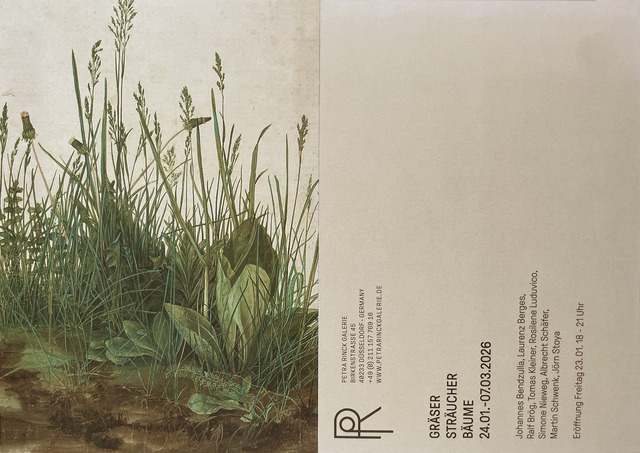
The motif on the invitation card is borrowed from the freely available collection of images from the work of Albrecht Dürer, whose work is interesting in several respects in this context.
His watercolor “The Large Piece of Turf” on the invitation card refers to a piece of nature in 1504 and is in no way different from the edges of meadows and lawns today. In contrast, the equally popular motif “Rhinoceros” shows an animal that most of us today know from photographs, films, or visits to the zoo. The painter himself never saw it and interpreted it based on the knowledge available at the time and his imagination. Even today, many of his motifs are available worldwide using the latest technology, thus continuing Dürer’s idea that his motifs should be accessible to everyone.
Since the late 1980s, Simone Nieweg has devoted her work to landscape. Her interest has so far focused exclusively on man-made cultural landscapes, not on seemingly untouched nature, nor on parks and ornamental gardens that serve merely for recreation. Her pictures show meadows and fields, field and forest paths, vineyards and fruit trees, and often vegetable fields, small animal stables, greenhouses, and sheds on so-called fallow land. Her large-format color photographs do not show classic landscape views, but rather peripheral places characterized by their usefulness. Her motifs, often found near her home in Düsseldorf on the Lower Rhine, in Westphalia, but also in France, do not have to be directly locatable. Rather, the images are universally representative of the landscape in Central Europe. Her compositions use existing structures such as paths, trees, or geometric fields as structuring elements.
In the work of Laurenz Berges, who like Simone Nieweg also studied under Bernd and Hilla Becher, people are absent. They are present only as traces, as signs. This symbolism in his work, which refers to people, has changed over the years. Beyond the specific anchoring of his images, Berges‘ view of the world has been a melancholic one from the outset. It is linked to the existential insight that things do not remain as they are. That they pass away and fade away. The two works shown here depict unspectacular details in nature, such as can be seen everywhere in urban, human-populated spaces, and which may hardly seem remarkable to us anymore.
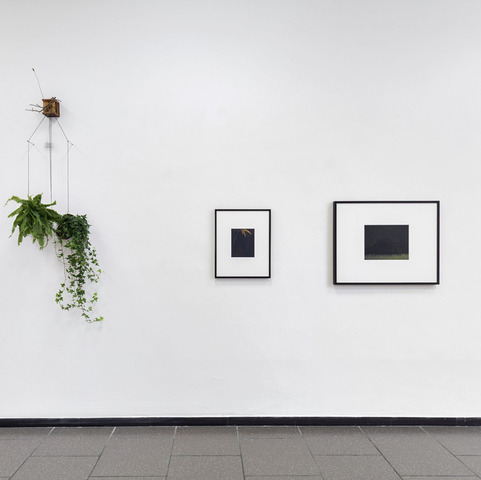
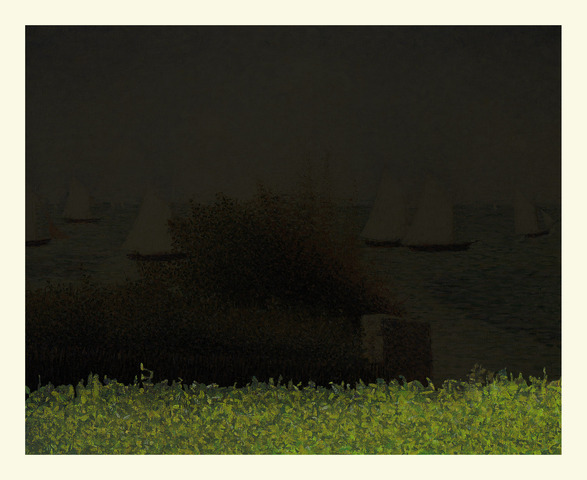
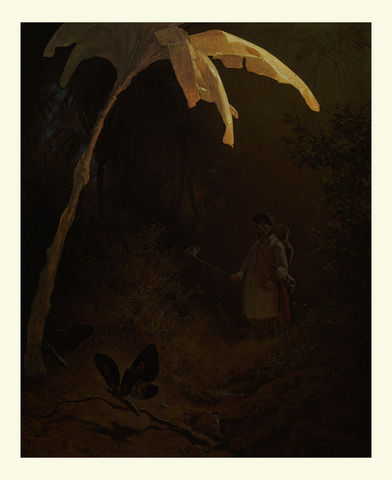
Ralf Brög presents images from his series “Isolations,” which serve as an opportunity for him to explore painting and pursue the figurative aspects of his artistic interests.
Each “Isolation” begins as a sketch, note, or drawing, but at the same time seeks pictorial possibilities that transcend the commentary on the subject. In his almost black pictorial worlds, Brög draws attention to individual isolated objects and allows the collectively remembered original works to sink into a shadowy darkness.
These works oscillate between the artist‘s unlimited possibilities for digital manipulation and, on the other hand, consistent reduction: how small can an intervention be that is not only concise but also conceptually meaningful? Where does the original end and the copy begin? How do representationalism and abstraction interact?
Both in Albrecht Schäfer‘s still lifes and in his installation works, the exploration of space and time plays a major role. For his arrangements, which serve as templates for his paintings, the artist mostly draws on existing objects: everyday items, materials from nature, and, more recently, found wooden planks, which are used as painting surfaces. Seemingly familiar objects are staged using subtle gestures, thereby removing them from their usual context and alienating them. The staging is followed by a lengthy process of observation and painting.
The work Ast#8, Var.2, presented shows a single branch in an unknown form. By sawing it into individual segments of equal size and then numbering them, a counted rearrangement is possible. The branch now appears artificial, hardly natural anymore, and thus strange and new.
One of the recurring motifs in Rosilene Luduvico‘s work is trees and forests. Biographically, they are linked to her childhood near the Brazilian rainforests, where part of her family still lives. Sometimes located in the landscape, sometimes as a stand-alone motif, the “trees” are always painted on the canvas with light, quick brushstrokes and depict abstract or almost abstract scenes. Repetition and variation are recurring themes in her work.
Small gestures and changes have a big impact. Rosilene Luduvico is currently exhibiting a mural at the Franciscan monastery in Kempen, in the group exhibition “Rhythm & Soul,” Brazilian contemporary art at 69 Projects by Kornfeld, Berlin, and “das Limit” with Julia Kröpelin at Paracelsusstr. 2c, Projektraum, Halle.
The sculptures by Martin Schwenk on display here are closely linked to changes in the trees in his garden in the Eifel region. Other sculptures by Martin Schwenk also evoke natural forms in their design. He combines plant elements, in this case tree bark, with technical materials such as pipes, hoses, or, in this case, PU foam to create heterogeneous hybrid forms that seem to originate from a fictional parallel world. For Martin Schwenk, proliferation and growth itself, as well as their systems of order, become the subject of his sculptures.
Tomas Kleiner develops performative, often participatory, and experimental artistic practices in which he understands plants and other living beings as active actors, placing them in states of movement, flight, or suspension and observing them. His cross-species flight exercises address ecological issues and show plants being set in motion in unusually dynamic ways. By staging these movement-based experiments as collective spaces for experimentation, Kleiner invites us to think of movement and mobility not solely as human opposites of control and freedom, but as a relational field in which plants, air, and humans circulate together and respond to one another.
Johannes Bendzulla‘s works are digital collages of photos and renderings, often combined with painterly and graphic elements, which he photographs in extremely high resolution.
Digital images have a decisive influence on the visual culture of our time. In his artistic work, Bendzulla explores their peculiarities and contradictions in order to gain an understanding of how we form our “image of the world” today.
He is particularly interested in one fundamental conflict: the tension between the physical and locational absence of virtual images and the fact that human perception of the world is fundamentally connected to our bodies.
Bendzulla attempts to give each image a specific “body”—as a conscious contrast to digital images, which can be displayed in any medium (screen, projection, print, etc., in any size and on a wide variety of materials). Thus, the sides of his works are just as carefully designed as the “actual” image surface. The haptic quality of his image surfaces plays just as important a role as the frames he uses.
He therefore also refers to his works as “image objects.”
![[thumbnail of Broeg_Grasses_Isolationen_ExhView_1]](https://sure.sunderland.ac.uk/id/eprint/20435/1/InstallationView_Graeser_PRG_sq.jpg "Broeg_Grasses_Isolationen_ExhView_1") 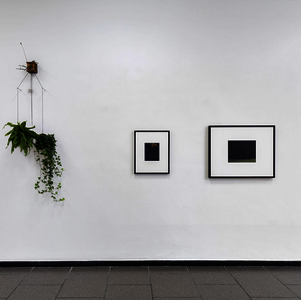 Preview |
Image (JPEG) (Broeg_Grasses_Isolationen_ExhView_1)
InstallationView_Graeser_PRG_sq.jpg Download (159kB) | Preview |
![[thumbnail of Broeg_Grasses_IsolationMeadows]](https://sure.sunderland.ac.uk/id/eprint/20435/2/Seurat_Meadows_V12.jpg "Broeg_Grasses_IsolationMeadows") 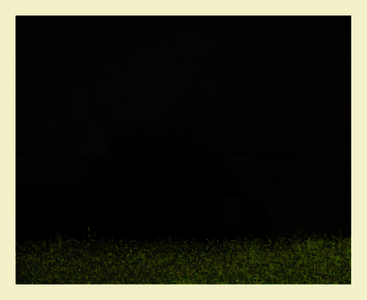 Preview |
Image (JPEG) (Broeg_Grasses_IsolationMeadows)
Seurat_Meadows_V12.jpg Download (718kB) | Preview |
![[thumbnail of Broeg_Grasses_Isolationen_Wilderness]](https://sure.sunderland.ac.uk/id/eprint/20435/3/Spitzweg_Wilderness_V12.jpg "Broeg_Grasses_Isolationen_Wilderness") 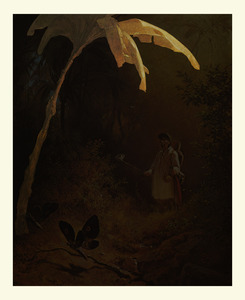 Preview |
Image (JPEG) (Broeg_Grasses_Isolationen_Wilderness)
Spitzweg_Wilderness_V12.jpg Download (396kB) | Preview |
![[thumbnail of Broeg_Grasses_Isolationen_Invite]](https://sure.sunderland.ac.uk/id/eprint/20435/4/IMG_1823.jpg "Broeg_Grasses_Isolationen_Invite") 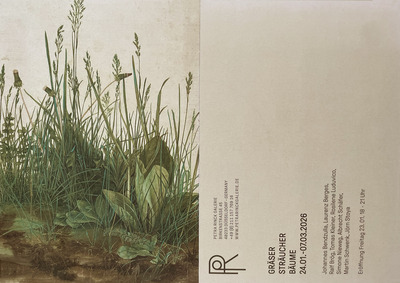 Preview |
Image (JPEG) (Broeg_Grasses_Isolationen_Invite)
IMG_1823.jpg Download (1MB) | Preview |
More Information
| Uncontrolled Keywords: art history, painting, contemporary art, photography, digital photography, isolation, contemporary photography, conceptual art, referential art, object oriented art |
| Related URLs: |
| Depositing User: Ralf Broeg |
Identifiers
| Item ID: 20435 |
| URI: https://sure.sunderland.ac.uk/id/eprint/20435 | Official URL: https://www.petrarinckgalerie.de/ |
Users with ORCIDS
Catalogue record
| Date Deposited: 21 Jul 2026 10:08 |
| Last Modified: 21 Jul 2026 10:08 |
| Author: |
Ralf Broeg

|
University Divisions
Faculty of Education, Society and Creative Industries > School of Media and Creative IndustriesSubjects
Fine Art > Art HistoryPhotography > Digital Imaging
Fine Art > Digital Media
Fine Art > Painting
Photography > Photography
Actions (login required)
 |
View Item (Repository Staff Only) |